Sample book of lives

This is the full reading for a sample person, Aurelia. Yours comes from your own name, date and answers.

Open your book of lives

The book of lives

A past-life reading

Aurelia

a painter

Halvard, a painter

a Norwegian fjord, around 1880

Previous lives

4

Soul age

young

Soul number

68

  1. Halvard, a paintera Norwegian fjord, around 1880
  2. Lucrezia, a herbalistVenice, around 1500
  3. Astrid, a scholara Viking settlement in the fjords, around 900
  4. Nefertari, a merchantThebes, in Egypt, around 1300 BC

The portrait

Your soul's journey

The soul number of Aurelia, from the name and the date of birth, is 68. It counts 4 previous lives on earth: a young soul.

4 lives stand out clearly, from a Norwegian fjord around 1880, Venice around 1500, a Viking settlement in the fjords around 900 and Thebes, in Egypt around 1300 BC.

Across them runs a single thread: an eye for beauty and the urge to create; healing hands, and a deep trust in nature's remedies; a hunger for knowledge and the courage to think for yourself; a talent for trade, languages and reading people. These are the gifts you have carried from life to life, and the reason some things in this life come so easily. The lesson your soul has been working on across its lives is freedom: to embrace change and use it wisely.

A young soul

The age of your soul

A young soul has lived only a few lives on earth. Young souls are fresh, curious and full of energy; they meet the world with wonder and learn fast, and they are not weighed down by old patterns. This life is a time of discovery: you are collecting experiences that will shape all the lives to come.

A soul number of 5 marks a soul of journeys; across its lives it has often travelled and lived through change.

In this life a young soul is drawn to action, achievement and experience. It wants to see the world, try everything and prove itself.

In love it is passionate and learning; relationships are a great school.

Its purpose

Its purpose is to gather experience, and to learn from it.

The most recent life · around 1880

Halvard of a Norwegian fjord

a painter

The most recent lives are the clearest: their memories are close to the surface, and their habits still shape the way you live now.

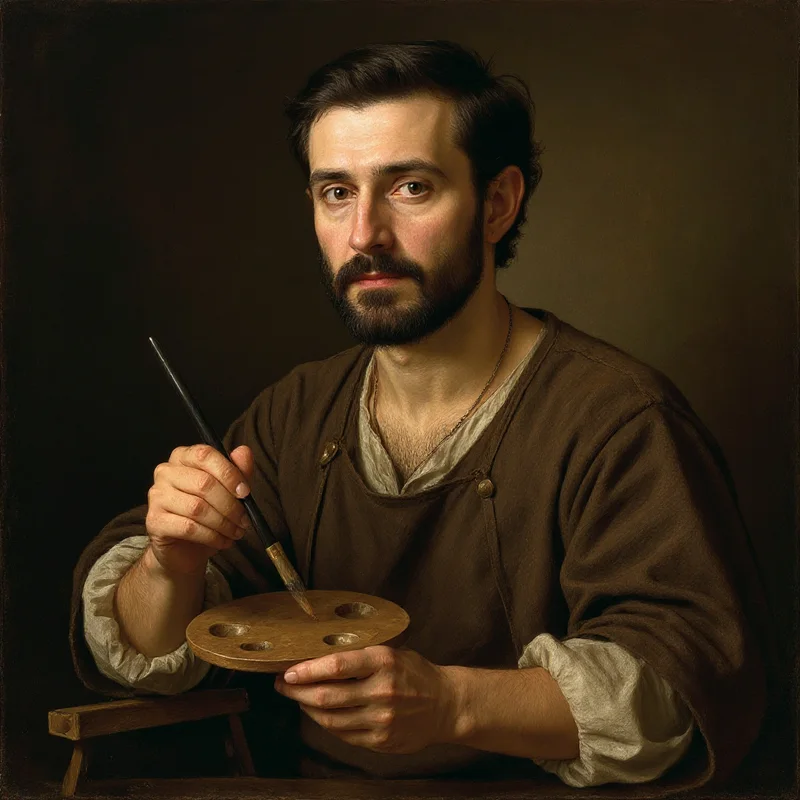
Around 1880, in a Norwegian fjord: a fishing village under sheer mountain walls, the dark water of the fjord and the long summer light. You were born a man and called Halvard, and lived as a painter.

You ground your own pigments and painted altars, walls and faces, and saw beauty where others saw nothing at all. Some of your colours have never faded.

You ground pigments in the morning, painted while the light held and spent the evenings sketching faces in the tavern.

You loved your model, and painted them into every saint and angel you made.

The world of that life

Norway was a land of fishing and farming under Swedish rule, with many leaving for America. The fjords lived by the sea and the herring.

Salt cod drying on racks, tar, wood smoke and the endless light of midsummer.

What that life learned and loved

You learned to see colour and light as few others could. You loved the moment a painting came alive. You left behind altarpieces and images that moved the faithful.

The sea calls you because you have lived beside it: its sound is the sound of a home you have not yet remembered.

What was carried into this life

From this life you carry an eye for beauty and the urge to create. You may recognise it in this: light and colour affect your mood, and museums feel like reunions.

In this life it shows as a visual eye, a love of art and a need to create.

In love you are drawn to beauty and to people who see the world as you do. At work you are drawn to the visual arts, design, photography, architecture or decoration. Your body remembers colour and light; grey days and ugly rooms drain you.

How it ended

That life ended with a fall: from a wall, a cliff, a tower or a mast. This is why heights unsettle you without reason. The lesson carried forward is that rising is safe, and that you may aim high again.

The second life · around 1500

Lucrezia of Venice

a herbalist

Lives of the Renaissance and the age of discovery were lived as the old world opened up; they left a restlessness, and a love of craft and learning.

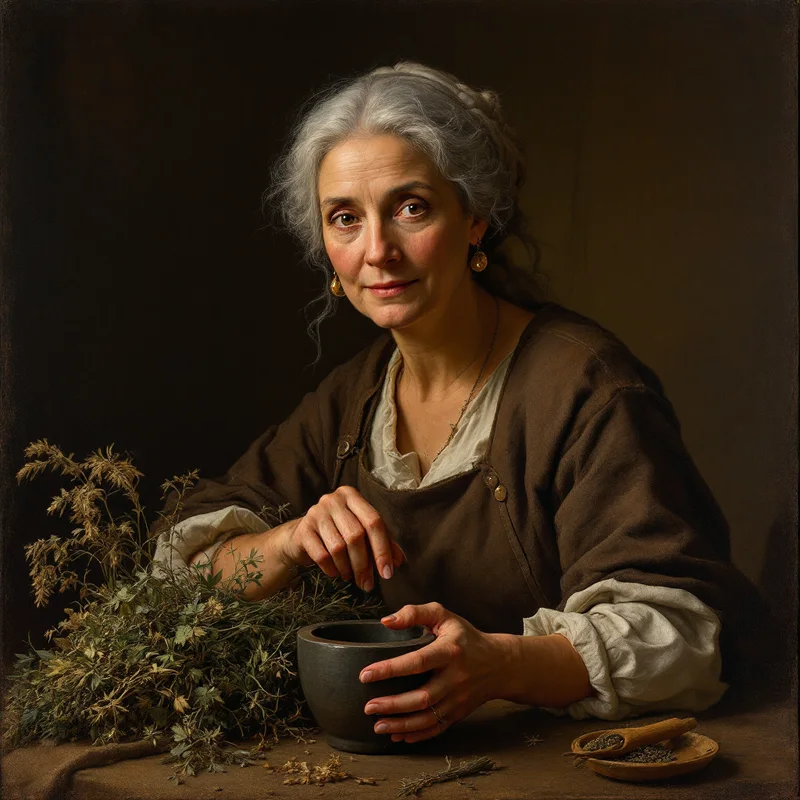
Around 1500, in Venice: the floating republic of canals and palaces, rich with the trade of the East, its lagoon full of galleys and gondolas. You were born a woman and called Lucrezia, and lived as a herbalist.

You knew every plant of the hedgerow and what it could cure, and people came to your door at night when the doctor would not. You were trusted, and sometimes feared.

You gathered plants at dawn when their virtue is strongest, dried them in the rafters and opened your door to whoever knocked, at any hour.

You loved a widower whose child you once saved, and the house was full of herbs and noise.

The world of that life

Venice was a maritime republic at the height of its wealth, trading between East and West, and printing books for all Europe.

Canal water, spices, the cries of gondoliers and church bells across the lagoon.

What that life learned and loved

You learned the secret names and uses of every plant and the rhythm of the seasons. You loved the early mornings gathering herbs and the gratitude of those you healed. You left behind remedies passed from mother to daughter.

What was carried into this life

From this life you carry healing hands, and a deep trust in nature's remedies. You may recognise it in this: you are drawn to plants and teas, and people tell you their pain.

In this life it shows as an instinct for healing, a love of plants and a calming presence.

In love you are caring and intuitive, sometimes attracting people who need healing; choose those who also care for you. At work you are drawn to medicine, therapy, nutrition, gardening or any work that restores people. Your body remembers in the hands and the sense of smell; plants and fresh air heal you quickly.

The third life · around 900

Astrid of a Viking settlement in the fjords

a scholar

Lives of the classical and medieval world are deeper in the soul: their lessons have become instincts rather than memories.

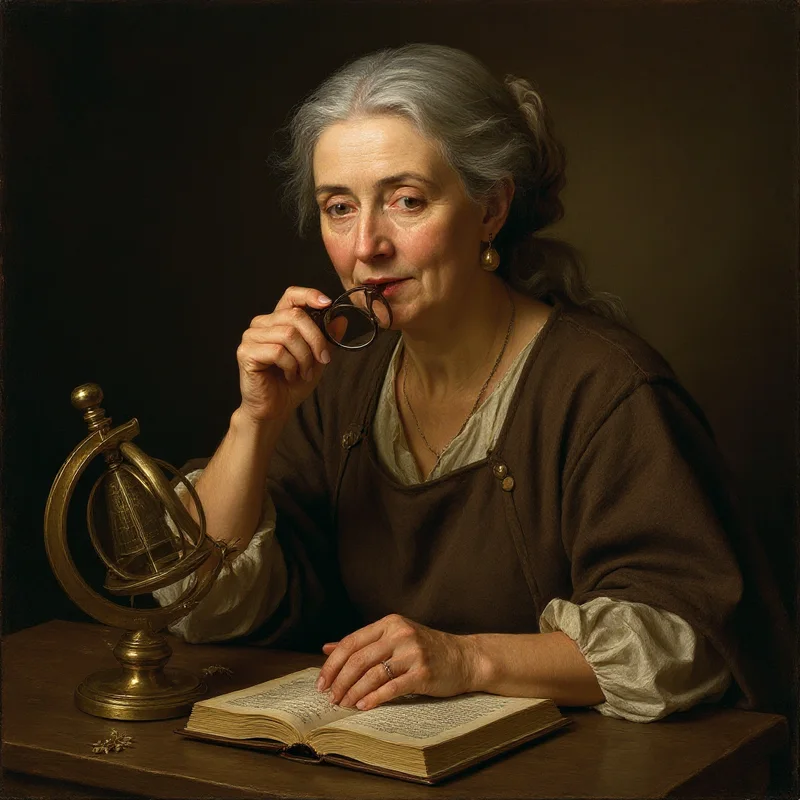
Around 900, in a Viking settlement in the fjords: longhouses by the water, longships drawn up on the shingle, and sagas told by the fire through the long winter. You were born a woman and called Astrid, and lived as a scholar.

You studied the stars and old books when few women were allowed to, often in secret, and corresponded with minds across the known world.

You read in the mornings, wrote letters in the afternoons and climbed to the roof at night to watch the stars, keeping notes no one else would read for centuries.

You loved a mind as much as a person, and found both in one correspondent far away.

The world of that life

The Vikings were raiding, trading and settling from Russia to Iceland, and the fjords were their homeland.

Wood smoke, salt fish, mead and the sea.

What that life learned and loved

You learned that knowledge must be fought for, and that the stars keep their own calendar. You loved the nights of study and the moment a puzzle came clear. You left behind notes and discoveries that others built on.

The echo

This is the era that fascinates you, and that is no accident: the pull you feel towards it is a memory. It is the life that echoes most strongly in this one.

What was carried into this life

From this life you carry a hunger for knowledge and the courage to think for yourself. You may recognise it in this: you lose hours in libraries, and questions keep you awake.

In this life it shows as curiosity, a love of learning and a refusal to accept easy answers.

In love you need an equal mind and a partner who respects your independence and your study. At work you are drawn to research, science, teaching and any field where knowledge is power. Your body remembers in late nights: you are often most awake when others sleep, and need to guard your rest.

The fourth life · around 1300 BC

Nefertari of Thebes, in Egypt

a merchant

The oldest lives, in the first civilisations, are the roots of the soul. What was learned there is part of who you are at the core.

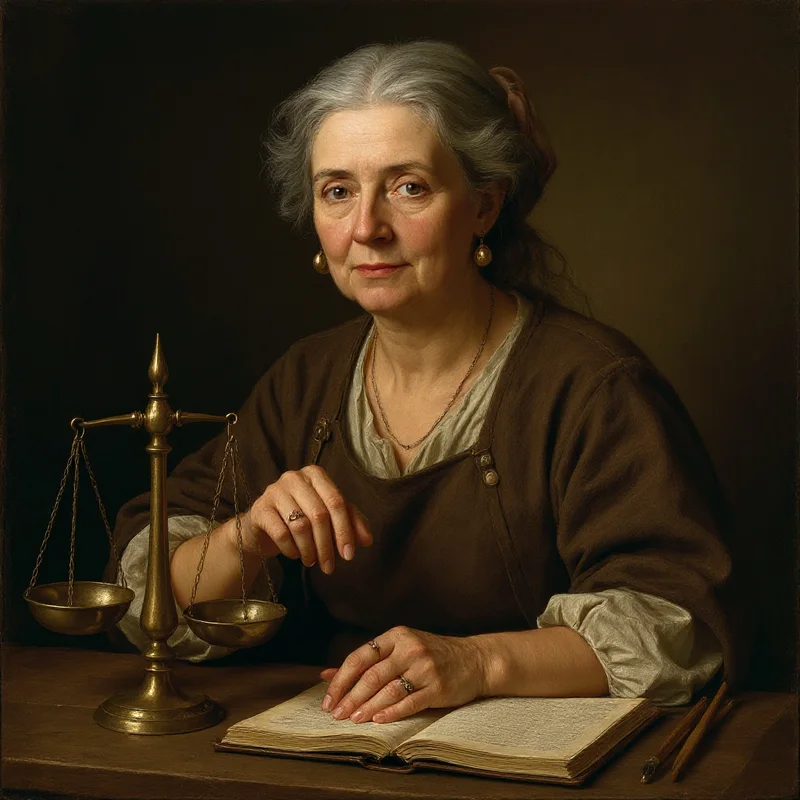
Around 1300 BC, in Thebes, in Egypt: the city of a hundred gates on the Nile, of the temples of Karnak and the tombs of kings across the river. You were born a woman and called Nefertari, and lived as a merchant.

You traded spices, cloth and silver between ports and languages, built a fortune, lost it, and built it again. You knew the worth of everything, and of trust most of all.

You opened your ledgers at dawn, met ships and buyers at the harbour, haggled in four languages and counted your coins by lamplight.

You loved a partner in business who became a partner in life.
The world of that life

Thebes was the religious capital of Egypt's New Kingdom, in the age of Ramesses and the great temples of Karnak and Luxor.

The Nile, papyrus, incense and the heat of the desert.

What that life learned and loved

You learned languages, value and the art of the deal. You loved the bustle of the market and the arrival of ships. You left behind fortunes and connections between peoples.

What was carried into this life

From this life you carry a talent for trade, languages and reading people. Your ease with words and languages was learned here. You may recognise it in this: you are good with money and negotiation, and markets fascinate you.

In this life it shows as a head for business, a love of travel and talent with people.

In love you are generous and sociable, bringing gifts and stories home. At work you have a head for business, negotiation, languages and trade. Your body remembers travel and bargaining; you thrive on movement and conversation.

The thread

Gifts that return

an eye for beauty and the urge to createhealing hands, and a deep trust in nature's remediesa hunger for knowledge and the courage to think for yourselfa talent for trade, languages and reading people

The lesson your soul has been working on across its lives is freedom: to embrace change and use it wisely.

In past lives this lesson shows as journeys, upheavals and new beginnings. In this life, complete it by embracing change without running from commitment.

The lives touched the last few centuries, the Renaissance and the age of discovery, the classical and medieval world and the first civilisations, and the soul chose a painter, a herbalist, a scholar and a merchant. In this life, all of them are present at once.

This life

What your past lives ask of this one

Write, tell, translate, teach. Words are the tools your soul knows best, and they are waiting to be used again.

To wake the old gift: write every day, learn an old language, and tell stories aloud.

The landscape that calls you is a door back. If you can, go to the old harbours of Lisbon, Venice or Bergen, and any coast where you can watch the ships come in; many people feel there a homecoming they cannot explain. The sea is a door back: walk the shore at dawn, and listen to what the waves bring up.

To ease it: climb a little at a time, with firm footing, and look at the view rather than the drop.

The dream that returns

Your recurring dream of an old house is one of the clearest past-life dreams: the house is usually a real home from an earlier life. Notice its rooms, its view and its light; they are memories.

Souls you may meet again

Once, with one person, you felt you had always known them. That is the classic sign of a soul companion, someone met in an earlier life; the bond carries an unfinished story.

People from your recent lives may be close to you now: family members, old friends or a partner you felt you knew at once.

People from your Renaissance lives may appear as teachers, collaborators or rivals.

People from your classical and medieval lives may appear as mentors or as souls you feel deep loyalty to.

People from your oldest lives may appear rarely, but when they do the recognition is unmistakable.

The fear you carry is not a weakness but a memory. Naming where it comes from is often enough to loosen it.

Remembering

Signs of past lives, and how to listen

  • Déjà vu in places you have never been, or a strange sense of homecoming in a foreign city.
  • Skills that came too easily, as if you were remembering rather than learning.
  • Fears and attractions with no explanation in this life.
  • People you feel you have known forever after one meeting: the members of your soul family.
  • Recurring dreams of another time, another place or another body.

Practices

  • Notice where you feel homesick for a place you have never been, and read about it: the details that move you are often memories.
  • Keep a dream journal for a month; past-life dreams tend to repeat, and to feel different from ordinary dreams.
  • Try the skills your past lives knew. What feels familiar rather than new is a thread back.
  • When you meet someone and feel you have always known them, ask yourself in which life you met before.

Sources

How this reading was made

Past-life readings belong to no single tradition, so this one uses a fixed formula of our own: the soul number is the sum of the date's digits and the name's letter values, and the number of lives is that number divided by thirteen, plus one. The answers to the questionnaire place one life in the era that fascinates you, one in the landscape that calls, give one life the role of the gift that came without training, and mark how one life ended. The rest is drawn from the name, date and answers, so the same person always receives the same lives. Portraits painted for this site. Written for reflection and entertainment.